LED That Blinks Once Every 100 Years: Galaxy Corporation Collection
Artwork, Seoul, 2025
Overview
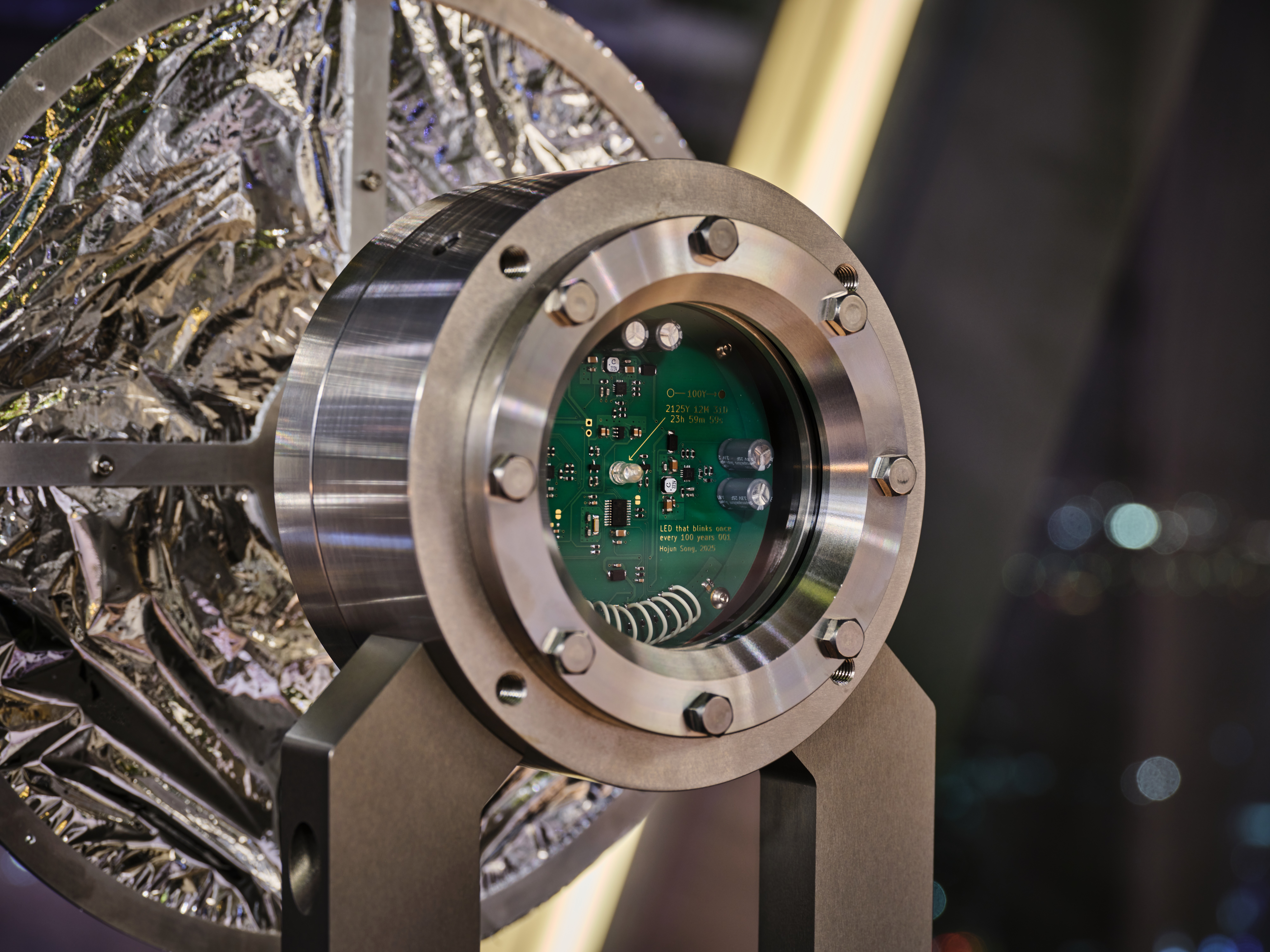
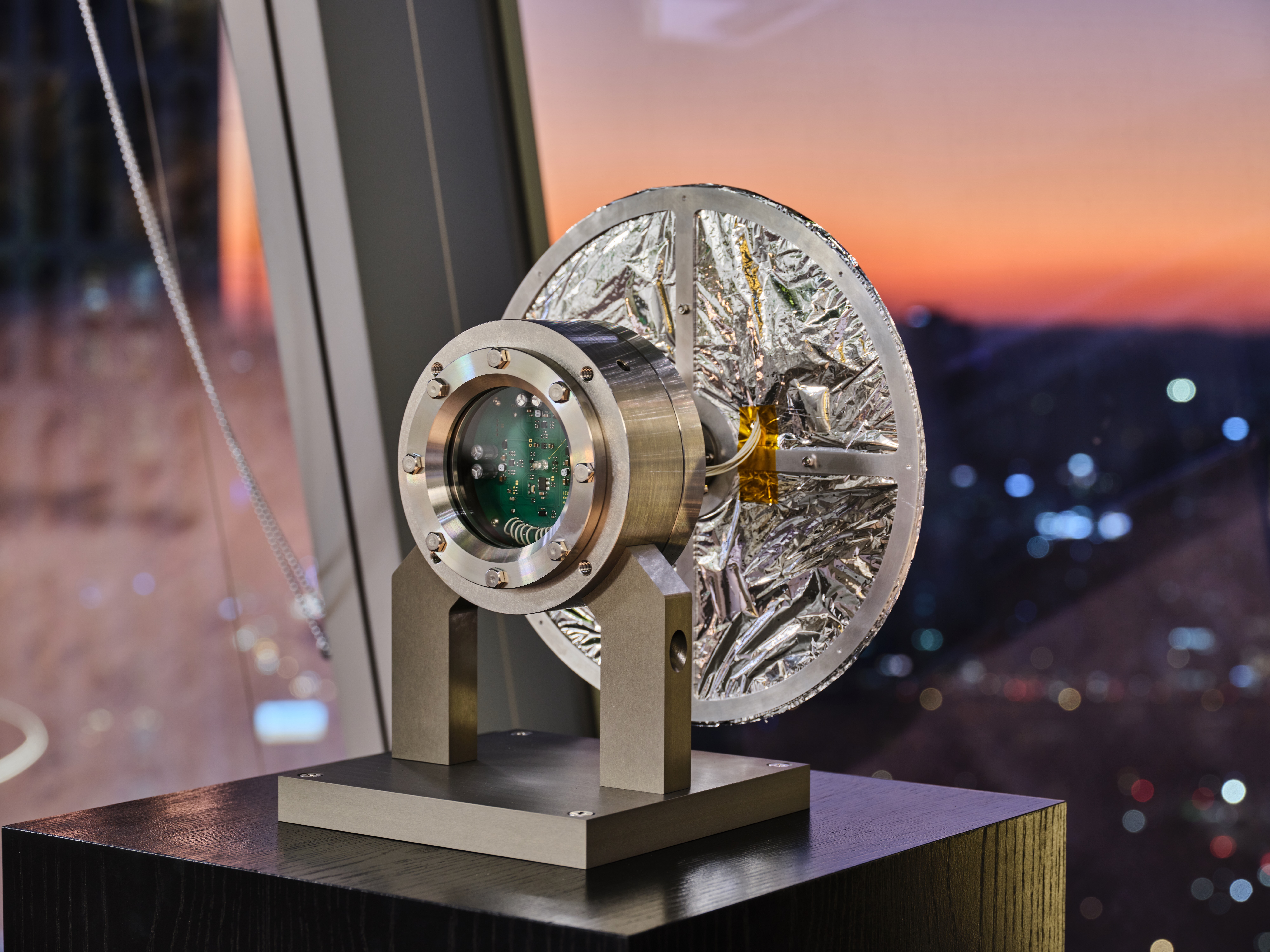
LED that blinks once every 100 years ver 001, 2025
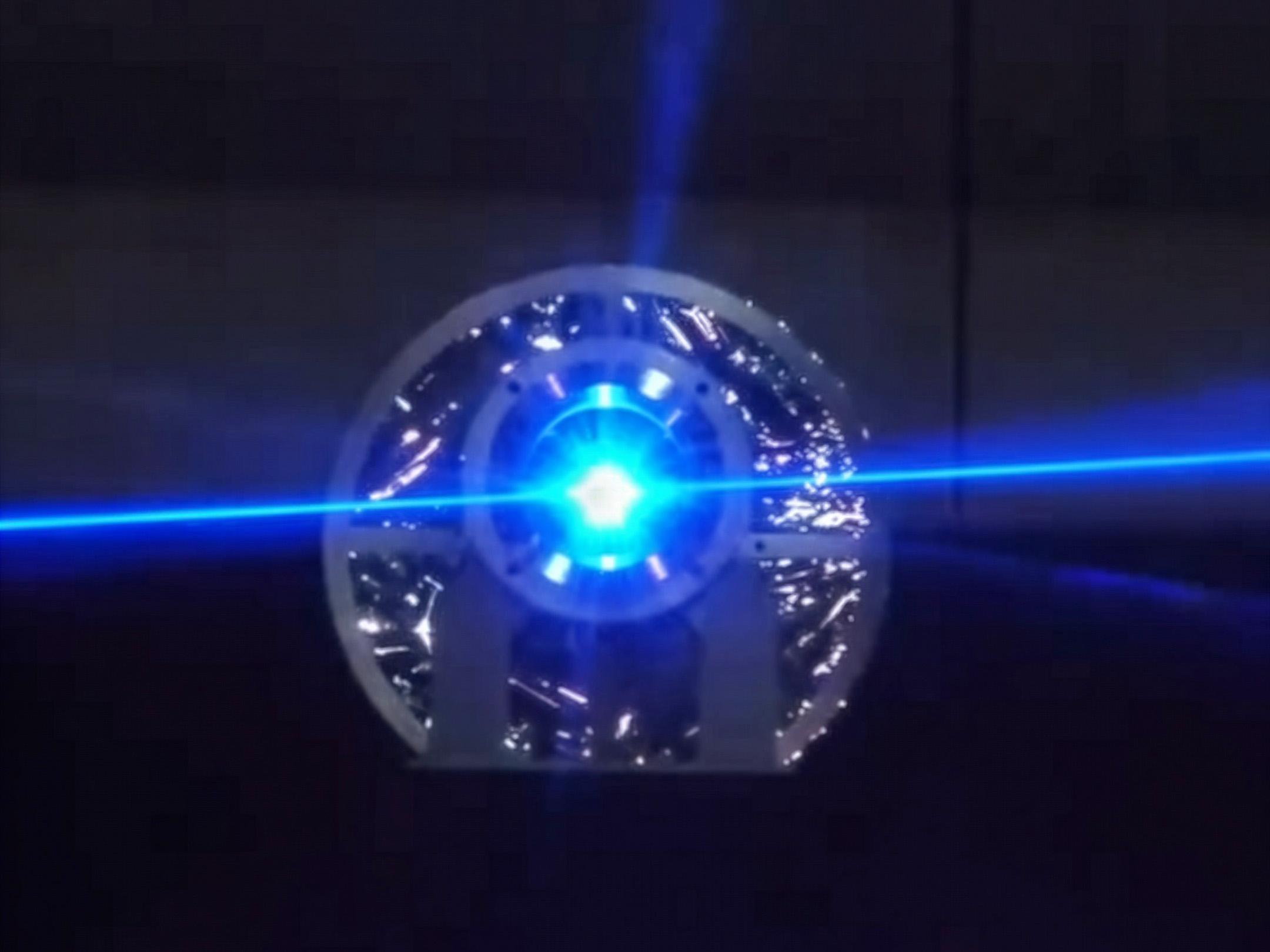
The LED blinks only once every 100 years. The first light was emitted at 8:00 PM on January 14, 2026. The next blink will occur at the same time on January 14, 2126.
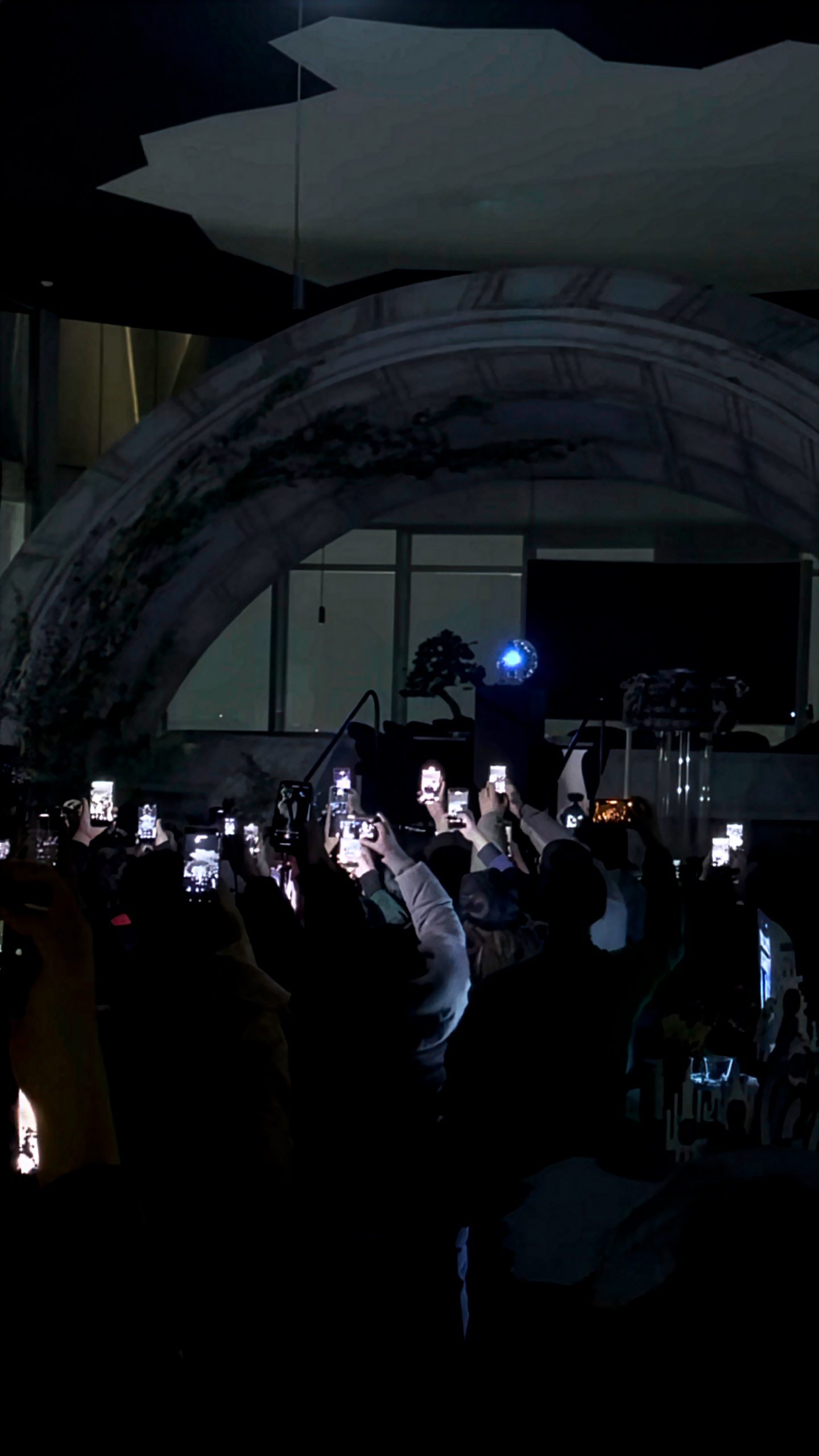
The First Blink, 14th Jan 2026 20:00:00 (KST)
The average data retention period of semiconductor electronics is merely 20 years. All our digital records could be lost in an instant.
Engineers solve how. Artists decide why. In this project, those roles blur—or reverse. A technical choice becomes a philosophical statement.
Choosing solar power over nuclear batteries is an engineering decision. But it makes the device mortal—it can die without care. That's a philosophical statement. How becomes why.
This is an extremely technical project but to ask a real question about finite lives and fragile digital history, it cannot stay as concept. It has to be built. Work like this needs artists and scientists together.
A forum is planned where scientists and artists will meet to discuss building the next versions.
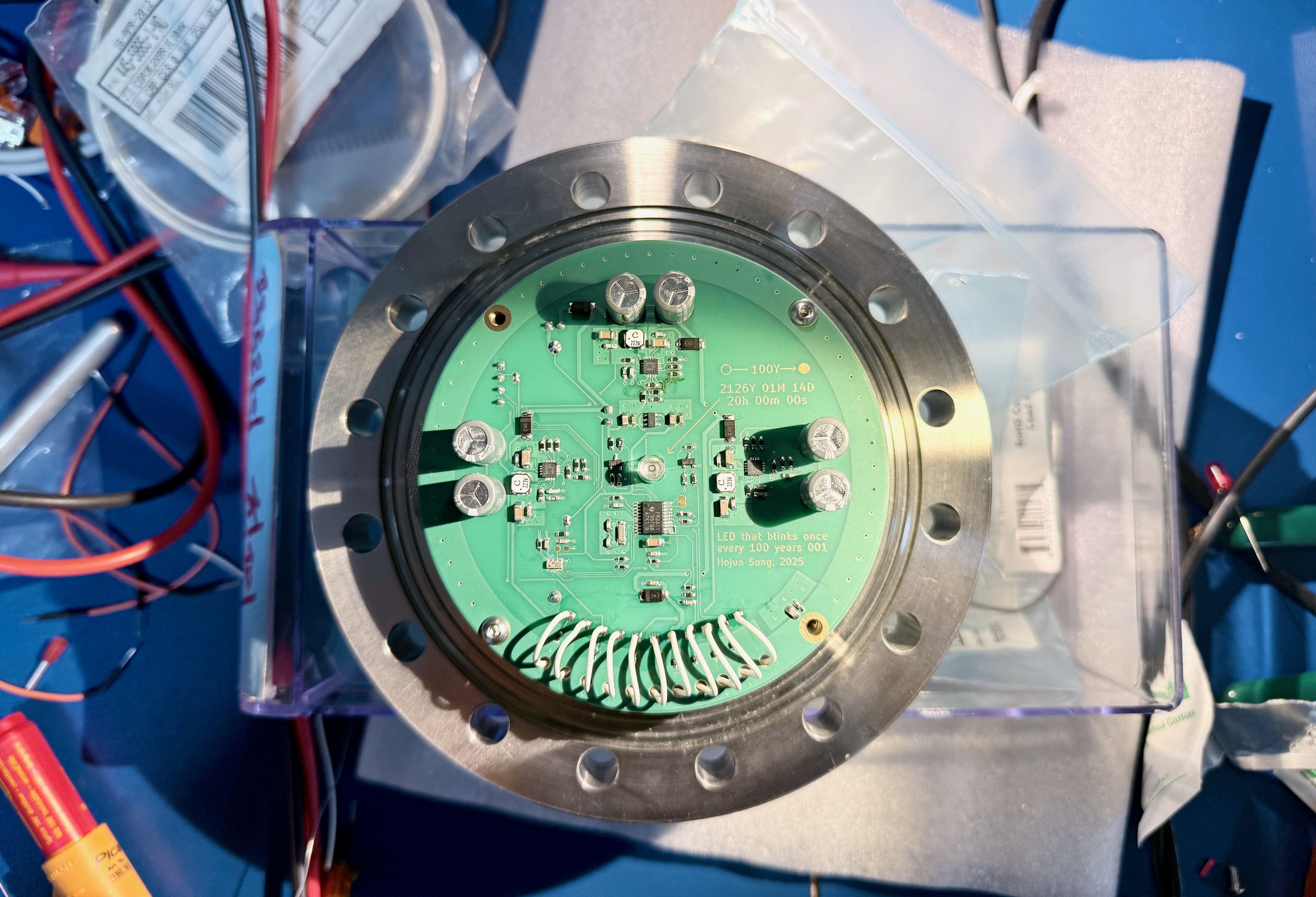
The LED That Blinks Every 100 Years PCB, 2026
Designing 100-year electronics is an existential practice
100 years—about as long as a person lives.
Making electronics last that long requires endless decisions. Resistors, capacitors, solder, wires, enclosure materials, inert gas, temperature control. Every component matters.
We don't think this hard about our own bodies. We already know our lifespan.
But electronics feel different. 100 years seems possible. So we try. We calculate. We choose materials. We design for survival.
Especially if we just want to light an LED—it seems feasible.
The whole process of making it becomes the practice. Every day, it makes you think about life, death, and what remains.
And when it finally blinks, you realize how sacred a simple LED can be.
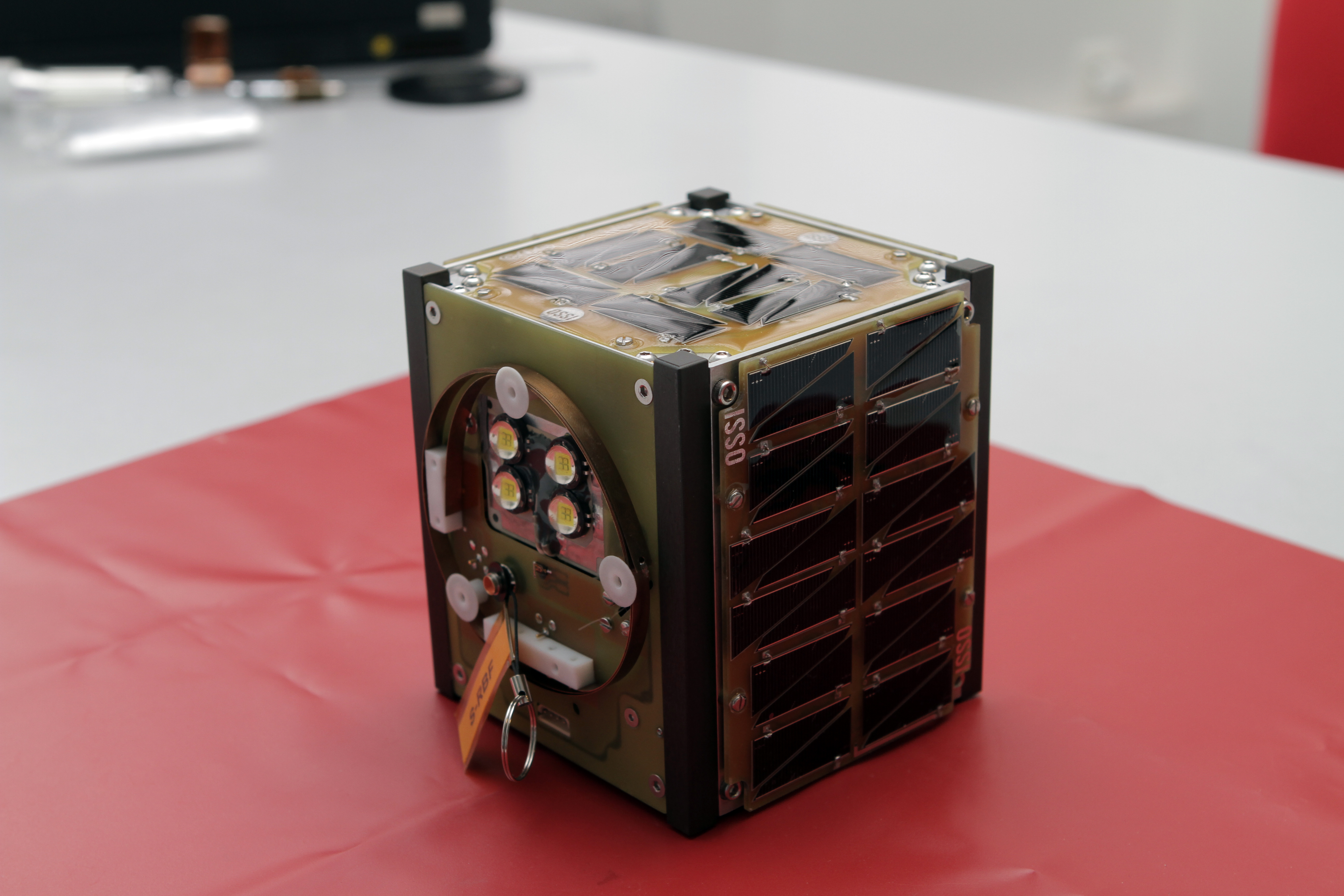
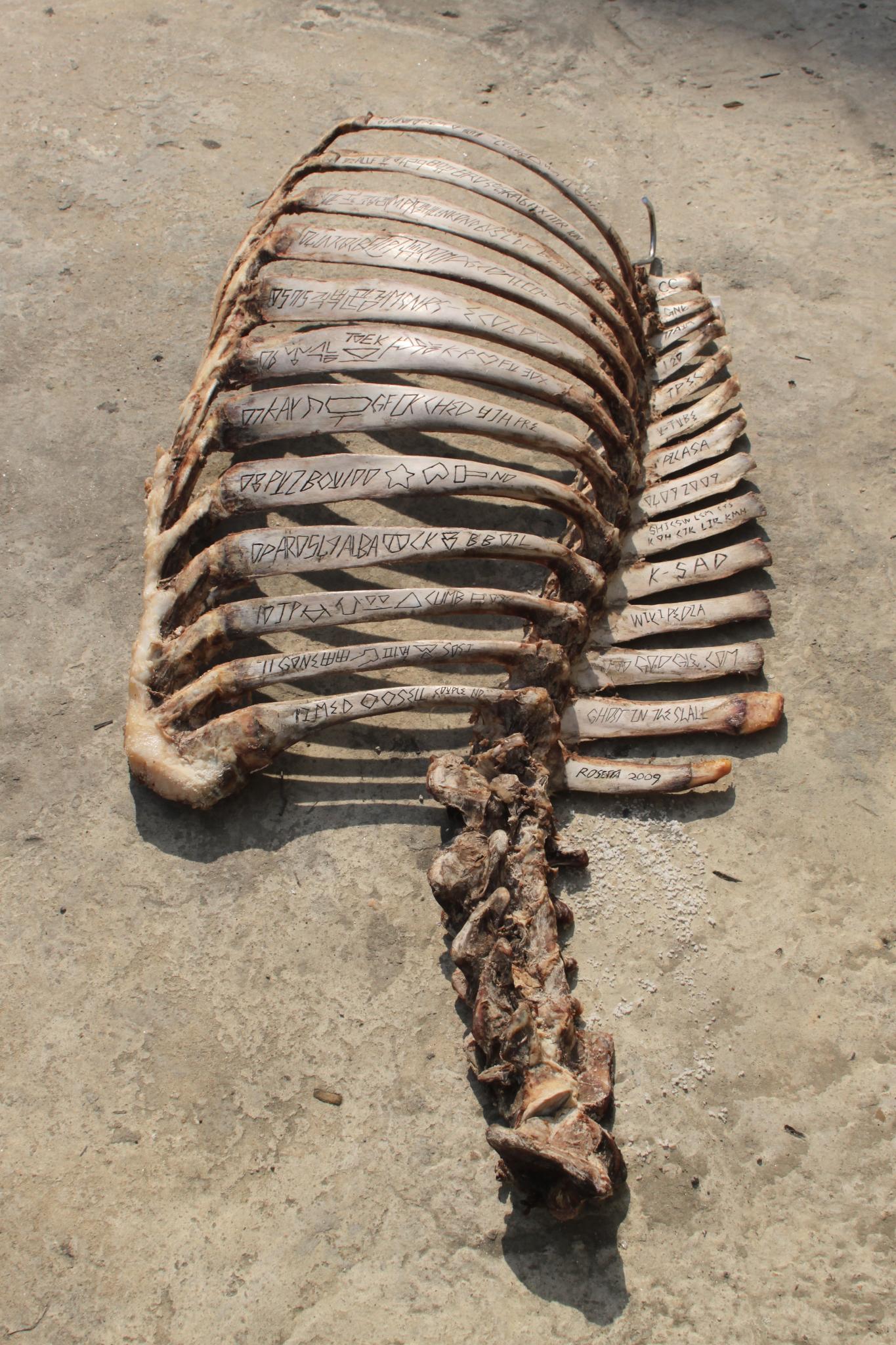
Strongest Weapon - Rosetta Stone Workshop, 2009
How It Was Made
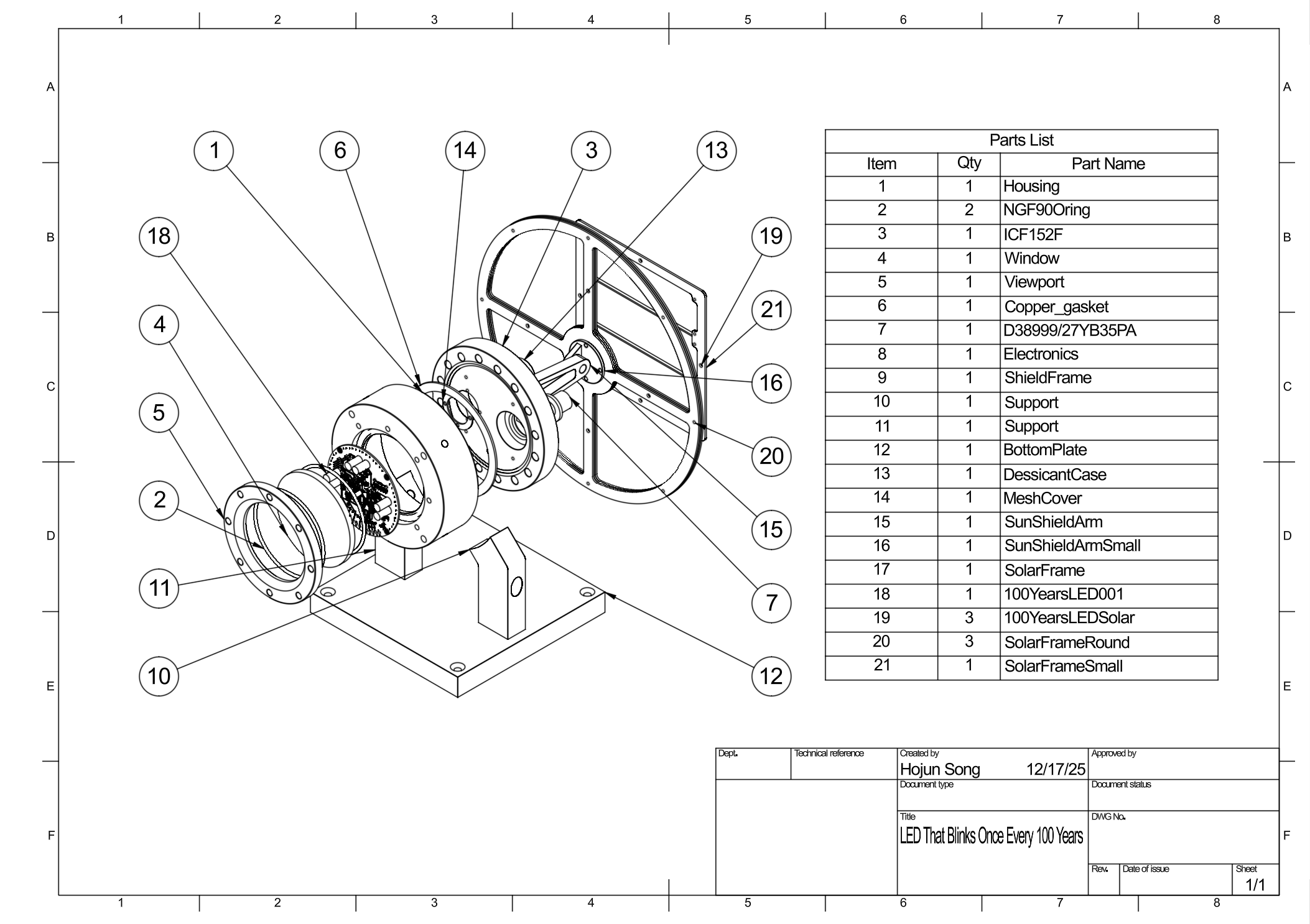
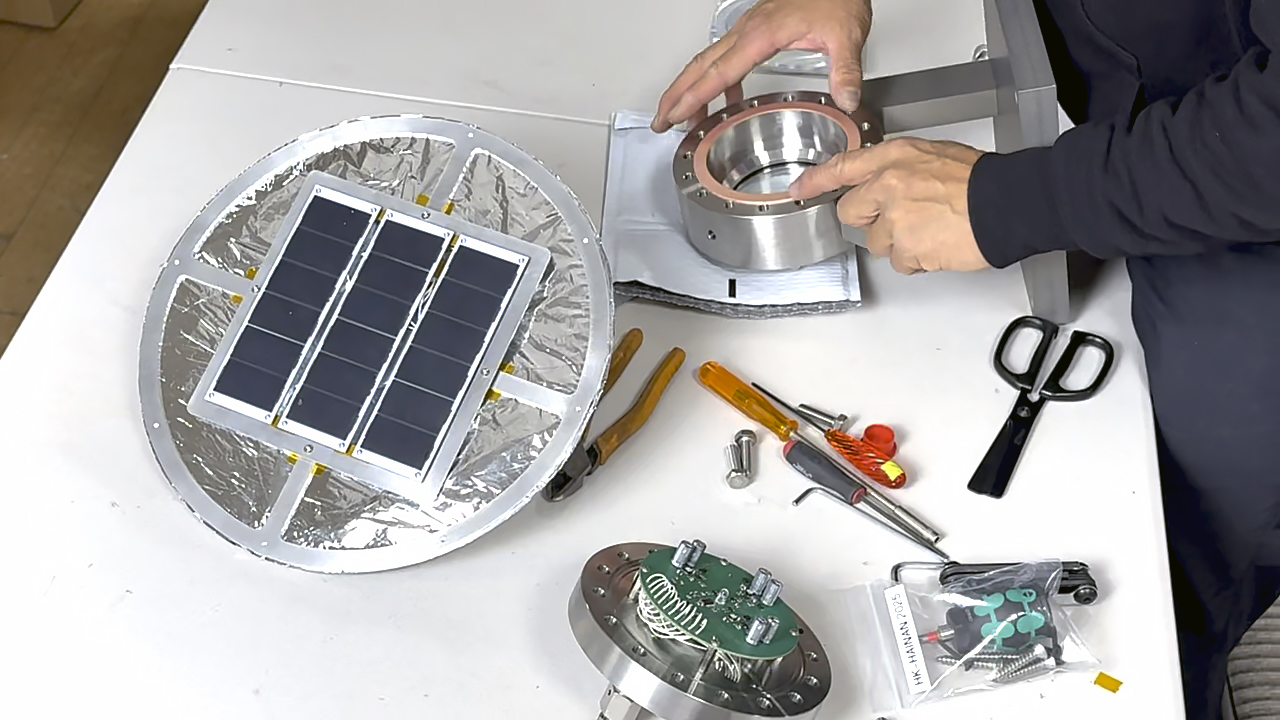
LED that blinks once every 100 years ver 001, 2025LED that blinks once every 100 years Assembly, 2025
To run for 100 years, the crucial part is making digital memory last that long. And finding a power source that lasts 100 years.
Flash memory lasts only about 20 years. FRAM can last 100 years. A low-power Real Time Clock keeps time. It wakes the FRAM microcontroller only to check if today is the day.
Regular batteries die too soon. Nuclear batteries last a century, but this version uses supercapacitors instead—they can charge and discharge forever.
High-efficiency solar cells and an energy harvesting controller let it charge from weak indoor light.
It faces the sun during the day, lives off that energy at night. If no one looks after it, it could die anytime.
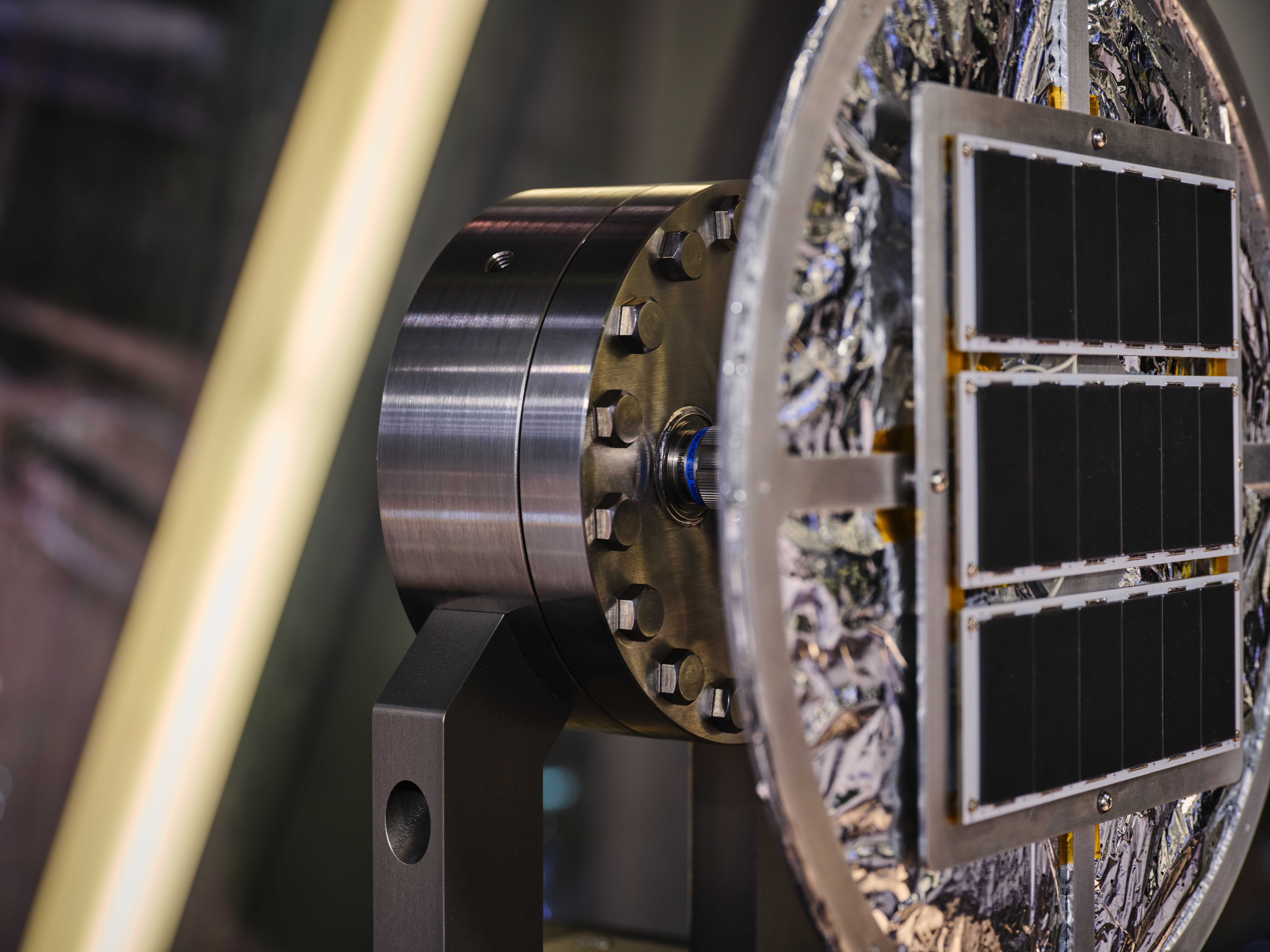
To prolong memory retention, it stays at 25°C while facing the sun. The design borrows from NASA's James Webb telescope sun shield.
To stop corrosion from air, the enclosure uses hermetic sealing—an ultra-high vacuum seal that even hydrogen and helium can't get through.
Keeping It Alive
Unlike the nuclear battery version proposed in 2014, this version needs ongoing human attention.
Place it by a window—it needs sunlight during the day. Keep the room around 25°C. Temperature swings shorten its life.
The person looking after it gets daily time with existential questions.
We won't know if it worked until it blinks again.
LED that blinks once every 100 years ver 001, 2025LED that blinks once every 100 years ver 001, 2025The First Blink at Galaxy Coporation, 2026
History
In 2014, this was planned as a public art installation. The jury asked twice to change it to blink once a year. No agreement was reached.
Twelve years later in 2026, the first version was built.